Cost Per Page Explained: The Hidden Printer Expense Most Buyers Ignore
“Imagine buying a printer at a great price… only to realize later that printing a single page costs far more than you expected. What seemed like a smart purchase can quietly drain thousands of rupees in ink or toner over time.”
👉 Last Updated: January 2026 — Tested against the latest printer models and running cost data.

👉 The truth is simple: The real cost of a printer isn’t what you pay at checkout — it’s what you pay every time you press Print.
This hidden expense is called cost per page, and ignoring it is one of the biggest mistakes printer buyers make. Whether you print occasionally at home or handle hundreds of documents monthly, understanding this single metric can save you from a costly long-term decision.
In this guide, you’ll learn exactly what cost per page means, how to calculate it, why it matters more than most people realize, and how to choose a printer that stays affordable for years — not just on day one.
If you’re comparing printers and wondering why some models become expensive over time, the answer usually comes down to cost per page. Understanding this single factor can help you avoid one of the most common — and costly — printer buying mistakes.
⚡ Cost Per Page — Quick Summary
– Cost per page determines your real printing expense.
– Cheap printers often have high running costs.
– Always calculate long-term printing expenses before making a purchase.
– Lower cost per page = better financial decision.
What Is Cost Per Page?
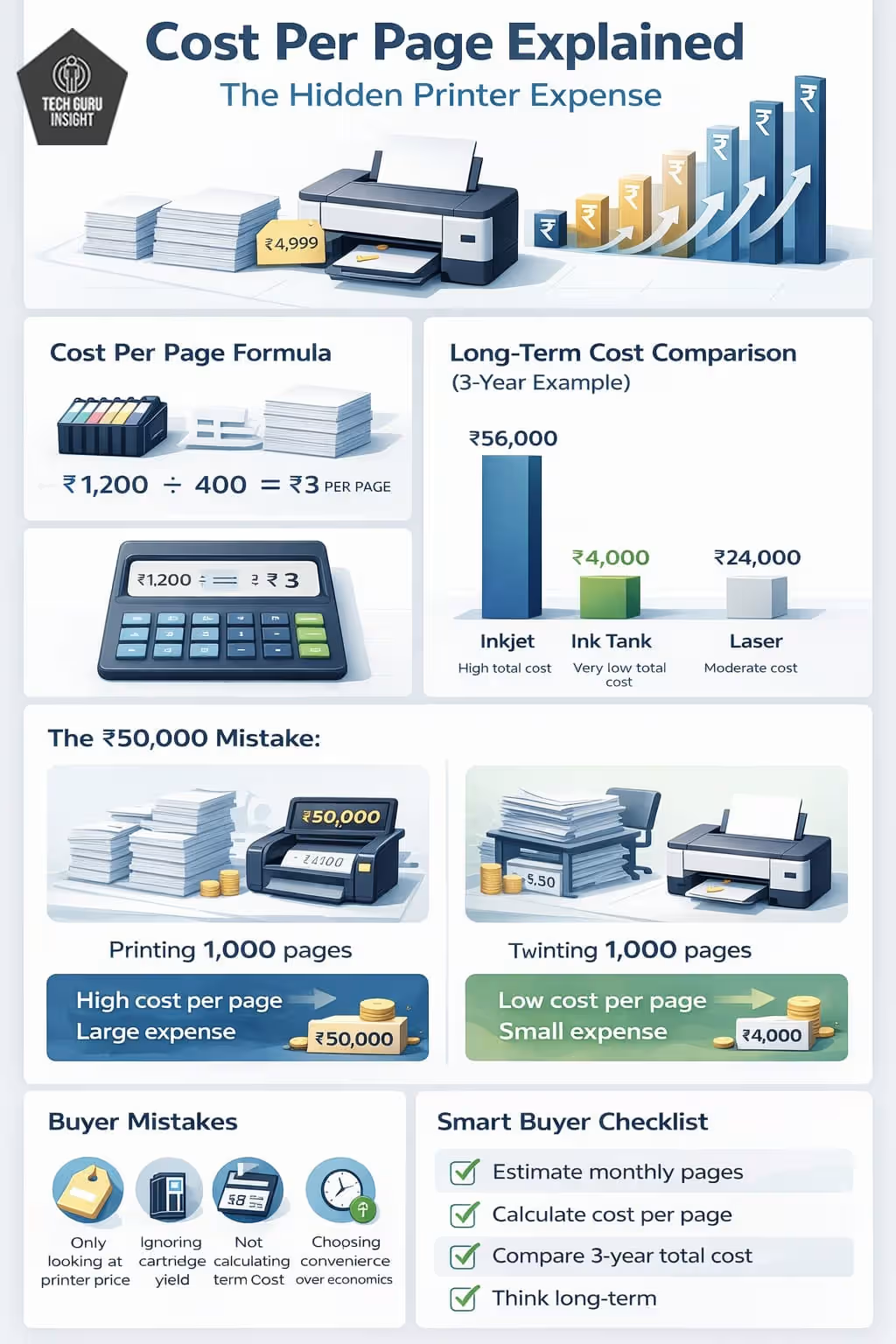
Cost per page is the amount of money required for a printer to produce one printed page. It is calculated by dividing the price of an ink cartridge or toner by its estimated page yield.
Example:
- Cartridge price: ₹1,200
- Page yield: 400 pages
Cost per page = ₹1,200 ÷ 400 = ₹3
That means every time you print, you’re effectively spending ₹3 — whether you notice it or not.
At first glance, this may not sound significant. But multiply that by hundreds or thousands of pages, and the numbers escalate quickly.

Why Cost Per Page Matters More Than Printer Price
Most buyers focus heavily on the printer’s upfront cost. It feels logical — after all, that’s the number you see while shopping.
But printers are often sold using a classic strategy:
👉 Lower hardware price
👉 Higher consumable cost
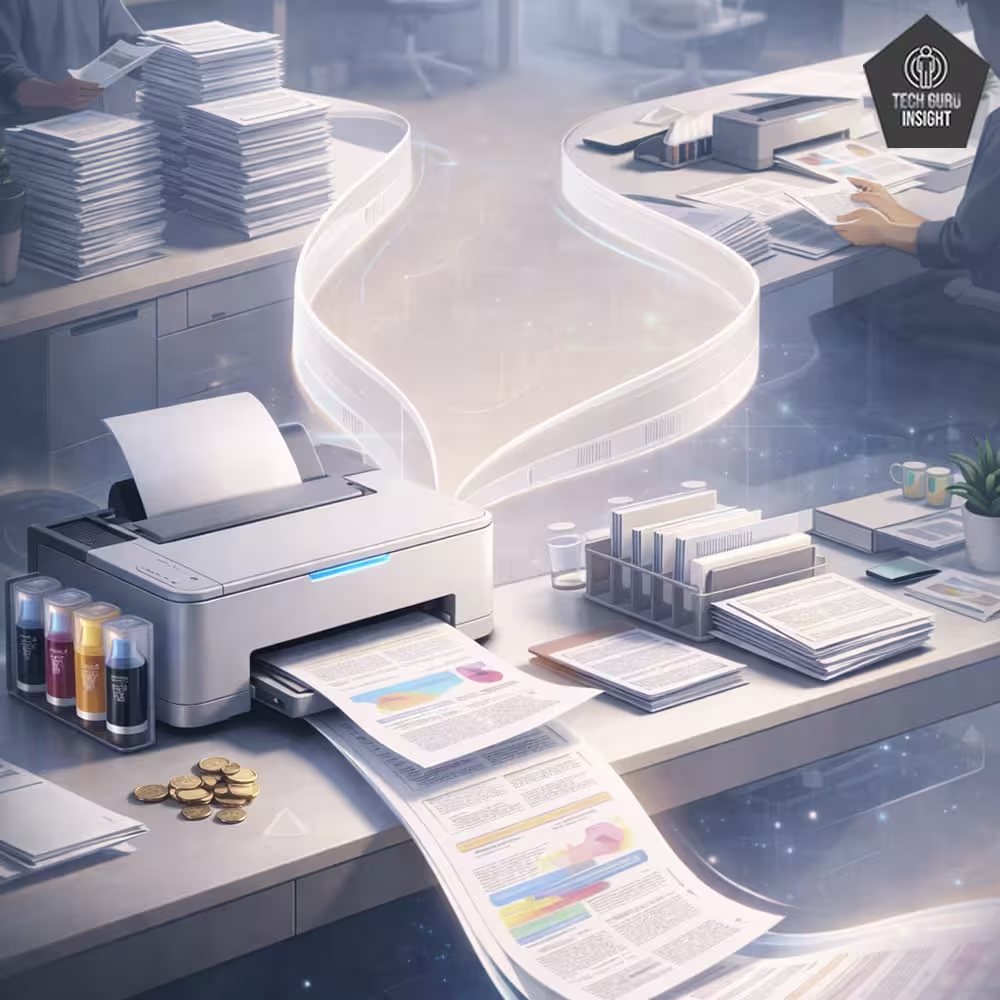
Manufacturers know many buyers compare printers based only on the initial price tag. So they make entry-level printers attractive while generating profit through replacement cartridges.
The Result?
A “cheap” printer can become the most expensive device in your workspace.
Think of it like buying a budget car that consumes twice the fuel. The savings disappear quickly.
The Printer Industry Secret Few Buyers Realize
Here’s something many first-time buyers discover too late:
Printers are not the business — ink and toner are.
Some manufacturers price printers aggressively because recurring consumable sales create long-term revenue.
This doesn’t mean you should avoid affordable printers — it simply means you must evaluate the total cost of ownership, not just the purchase price.
Once you begin comparing printers through this lens, your decision-making becomes far smarter.
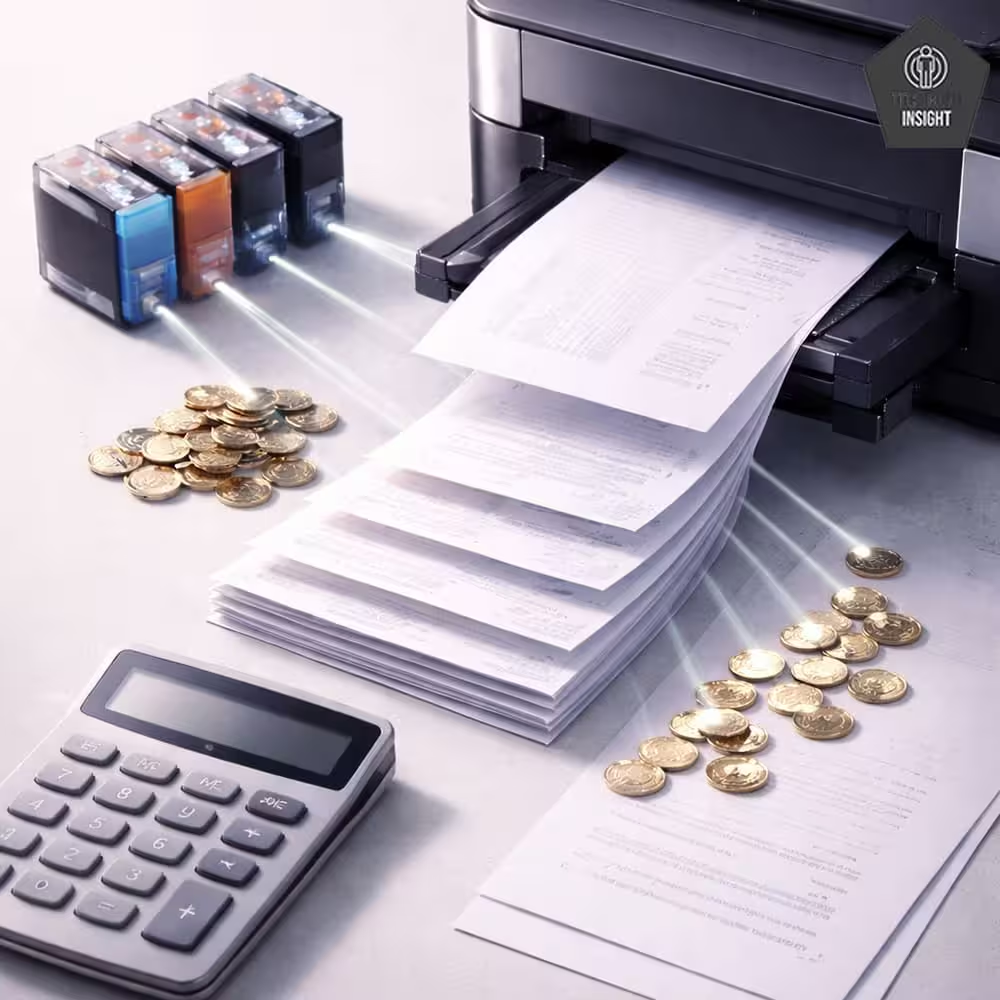
How to Calculate Cost Per Page (The Simple Formula)
Fortunately, calculating printing cost is easy.
Basic Formula
Cost Per Page = Cartridge or Toner Price ÷ Estimated Page Yield
You can usually find page yield in the printer specifications. Page yield is typically measured under standardized testing conditions defined by the International Organization for Standardization (ISO).
Let’s make that real with a quick example.
If a cartridge costs ₹1,200 and is designed to print 400 pages, the calculation looks like this:
₹1,200 ÷ 400 = ₹3 per page
That means every page you print costs roughly ₹3 in ink alone.
Quick Tip
“Always use the yield for standard printing coverage. Heavy graphics or photos can increase real-world costs.”
Now that you know how easy it is to calculate printing costs, let’s see how ignoring this tiny number can lead to massive long-term expenses.
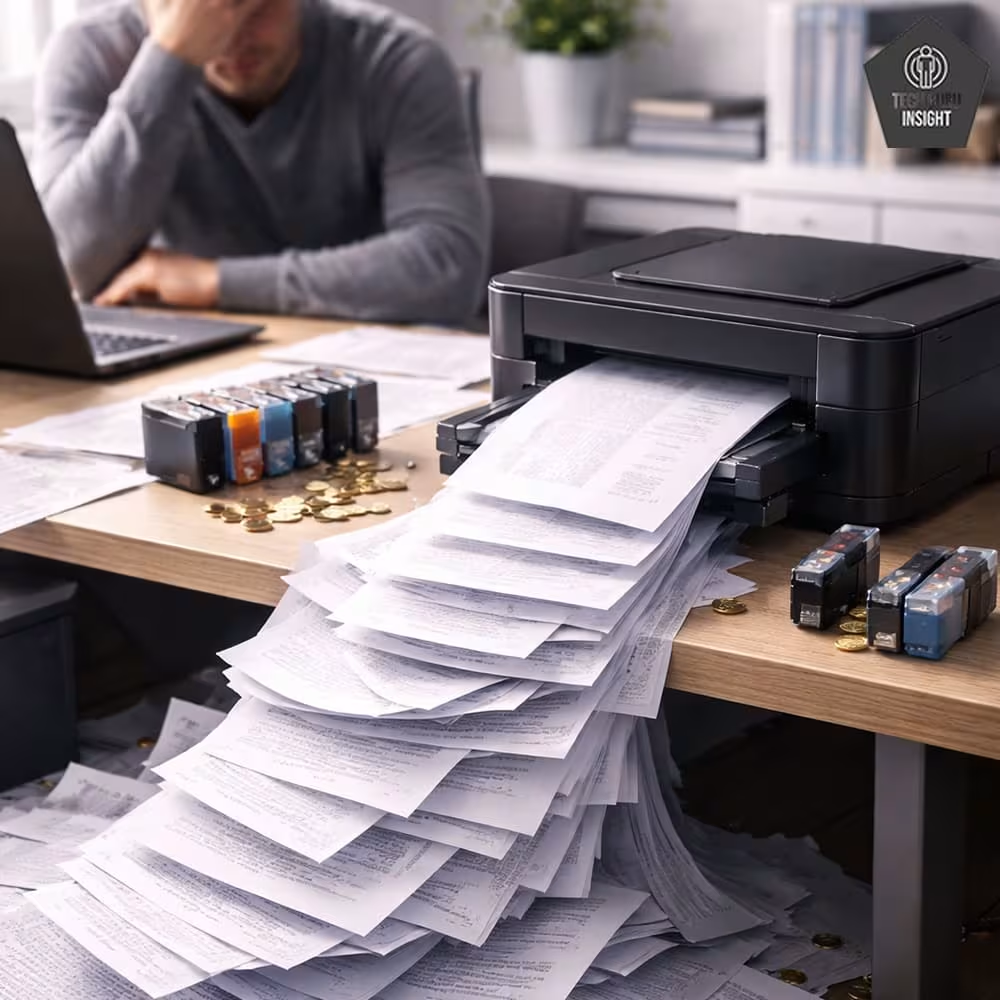
The ₹50,000 Printing Mistake (Realistic Scenario)
Let’s look at a situation that mirrors what many households and students experience.
A student prints about 250 pages per month using a printer that costs ₹5 per page.
Annual Printing Cost:
250 × ₹5 × 12 = ₹15,000
Three-Year Cost:
₹15,000 × 3 = ₹45,000
Now compare that to a printer costing ₹0.50 per page.
Three-Year Cost:
250 × ₹0.50 × 12 × 3 = ₹4,500
Potential savings: Over ₹40,000.
This is why cost per page isn’t just a technical metric — it’s a financial decision.
Real-Life Cost Comparison (3-Year Example)
Below is a simplified illustration to help you visualize long-term expenses.
| Printer Type | Avg. Cost Per Page | Monthly Pages | 3-Year Printing Cost |
| Inkjet | ₹6 | 150 | ₹32,400 |
| Ink Tank | ₹0.40 | 150 | ₹2,160 |
| Laser | ₹2 | 150 | ₹10,800 |
Key Insight
“The printer with the lowest purchase price often ends up costing the most over time. This is the psychological trap many buyers fall into.”
What Is a Good Cost Per Page?
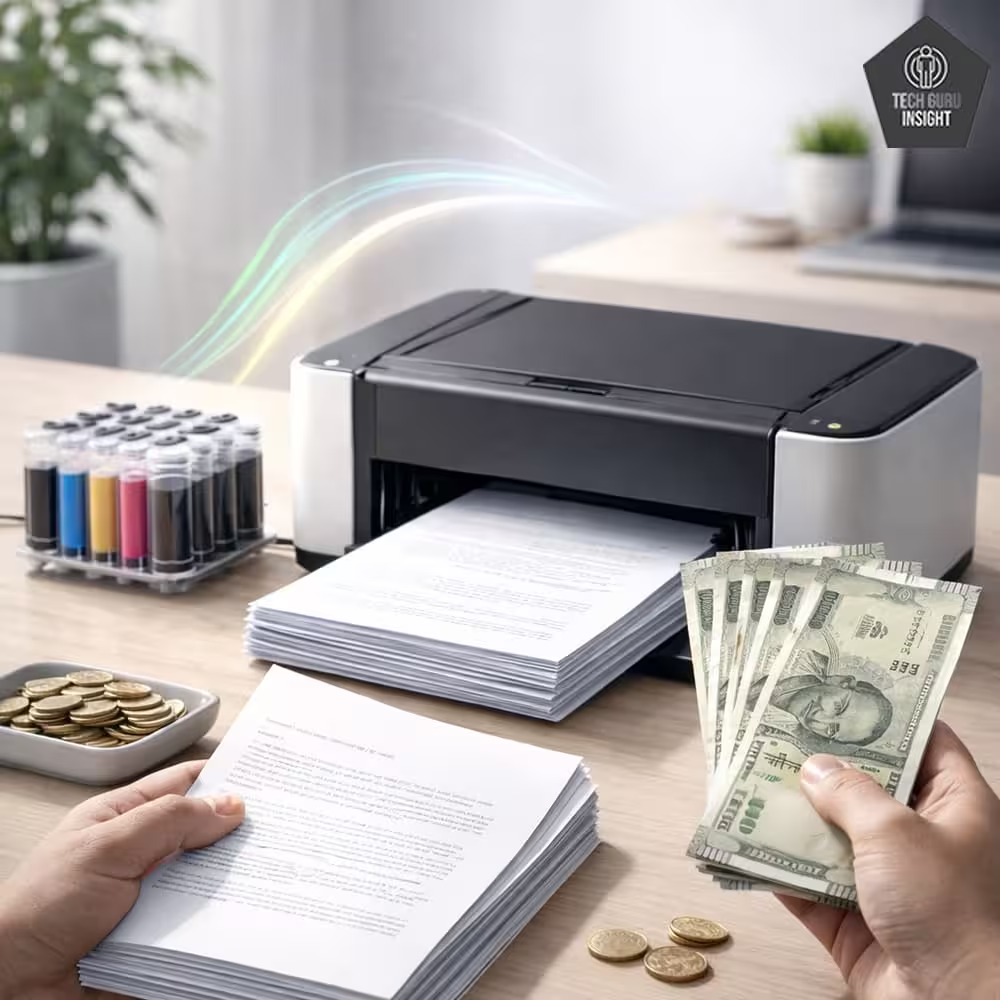
A “good” cost per page depends largely on how often you print, but one principle always holds true — the lower the cost per page, the more you save over time.
Instead of focusing on exact numbers (which change as printer technology evolves), it’s smarter to evaluate printing costs in ranges.
Very High Cost Per Page: Best suited only for occasional printing. If you print a few pages once in a while, a higher per-page cost may not significantly impact your budget — but it becomes expensive quickly with regular use.
Moderate Cost Per Page: Generally acceptable for typical home users who print assignments, forms, or documents periodically. It offers a balance between upfront printer cost and ongoing expenses.
Low Cost Per Page: Ideal for families, students, remote workers, and small offices. Lower printing costs reduce long-term financial strain and make frequent printing far more affordable.
Extremely Low Cost Per Page: Designed for high-volume environments. When printing hundreds of pages monthly, even small savings per page compound into substantial yearly savings.
Smart Buyer Insight
Instead of asking “Is this printer cheap?” ask
“Will this still feel affordable after 5,000 pages?”
That single question prevents one of the most common printer buying regrets.
“Now that you know what qualifies as a good printing cost, let’s look at why focusing only on the printer’s purchase price can be misleading.”
Cost Per Page vs Total Cost of Ownership
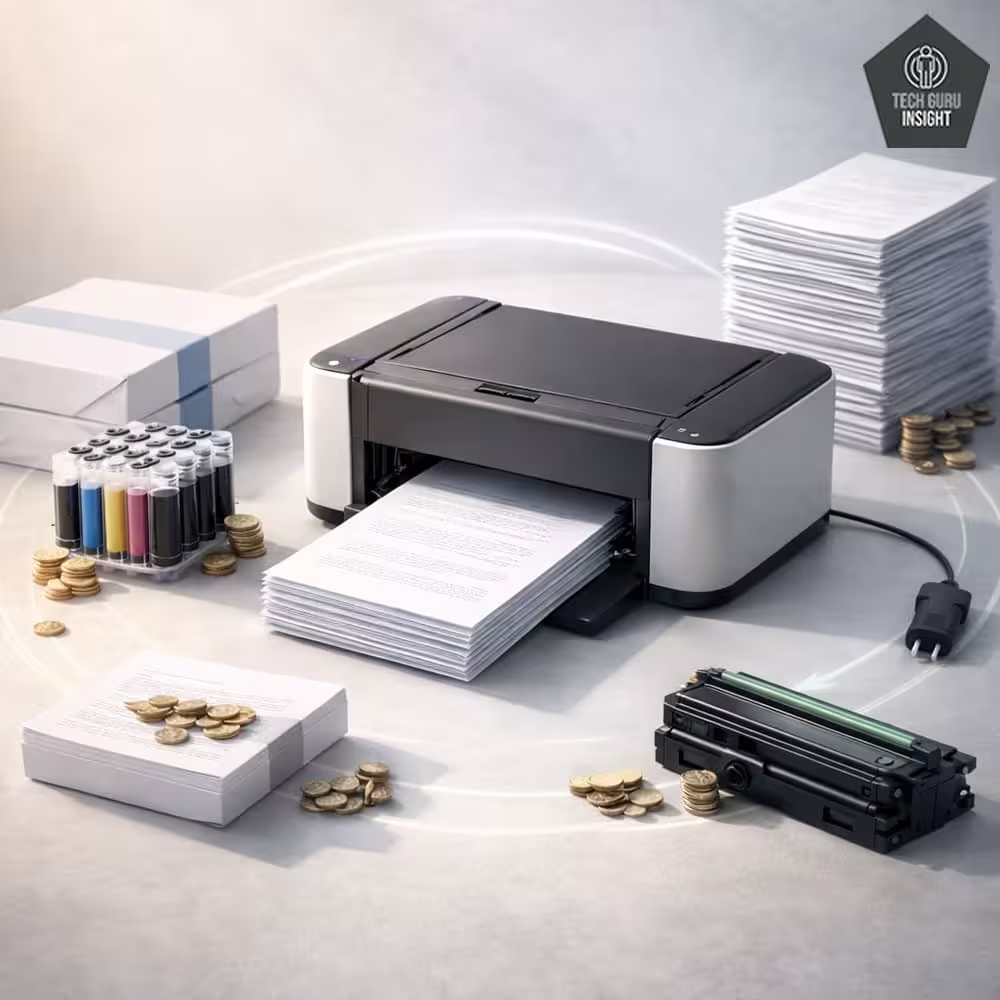
While cost per page is one of the most important factors when evaluating a printer, it doesn’t represent the entire financial picture. Smart buyers look beyond printing costs and consider the total cost of ownership — the true expense of using a printer over several years.
Owning a printer involves multiple ongoing costs, including:
- Ink or toner: The primary recurring expense that directly affects printing affordability.
- Maintenance: Occasional servicing helps keep print quality consistent and prevents costly breakdowns.
- Replacement parts: Components such as drums or maintenance kits may need changing over time, especially with heavier usage.
- Paper: Often overlooked, but frequent printing makes it a meaningful long-term expense.
Electricity: Typically minor, yet still part of the overall operating cost. Energy-efficient printers certified by ENERGY STAR can help reduce electricity usage over time.
Smart Buyer Insight
A printer with a slightly higher purchase price but lower operating expenses can often cost far less over its lifetime.
Looking at the bigger financial picture helps you choose a printer that stays economical — not just initially, but for years to come.

Cheap Printers vs True Long-Term Cost
A low upfront price creates immediate satisfaction.
But printers are long-term devices — often used for 3–5 years.
When evaluating a printer, ask yourself:
👉 What will this cost me after 1,000 pages?
👉 After 5,000 pages?
👉 After three years?
Shifting your perspective from purchase cost → lifetime cost instantly separates smart buyers from regretful ones.
The 1,000 Page Rule (Remember This)
Always calculate what it costs to print 1,000 pages before buying a printer.
Why 1,000?
Because it reveals the real economics quickly.
- ₹5 per page → ₹5,000
- ₹0.50 per page → ₹500
That difference alone can exceed the price of the printer itself.
Memorable rules like this prevent expensive mistakes.
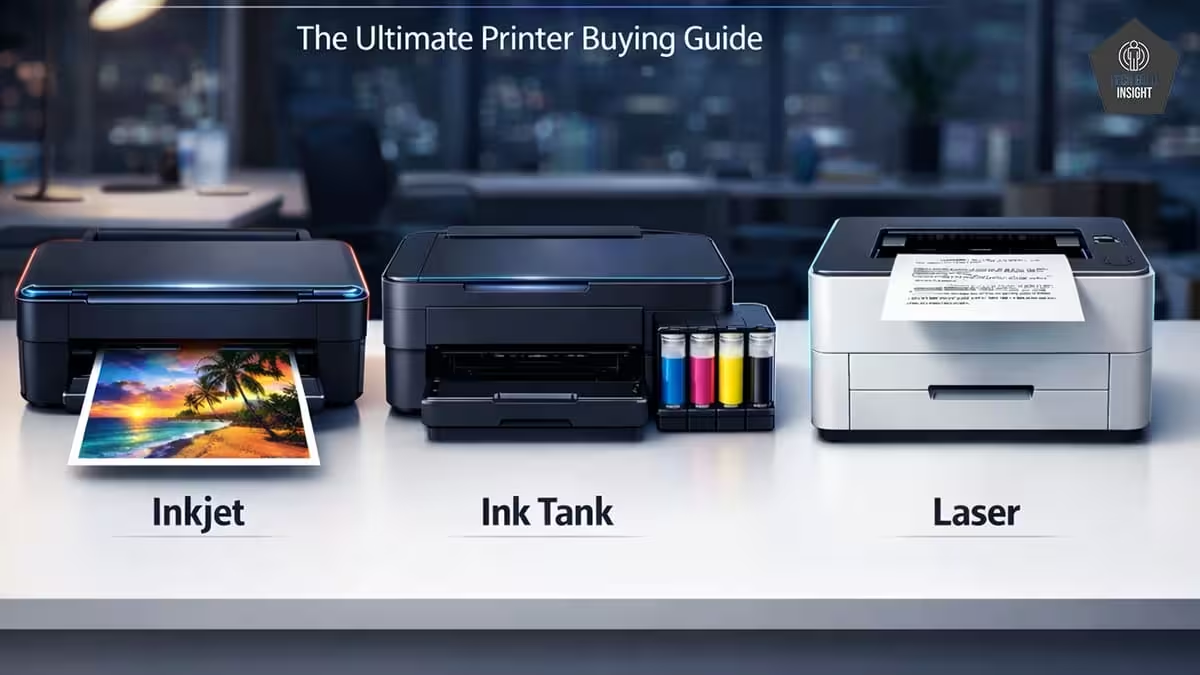
Cost Per Page by Printer Type
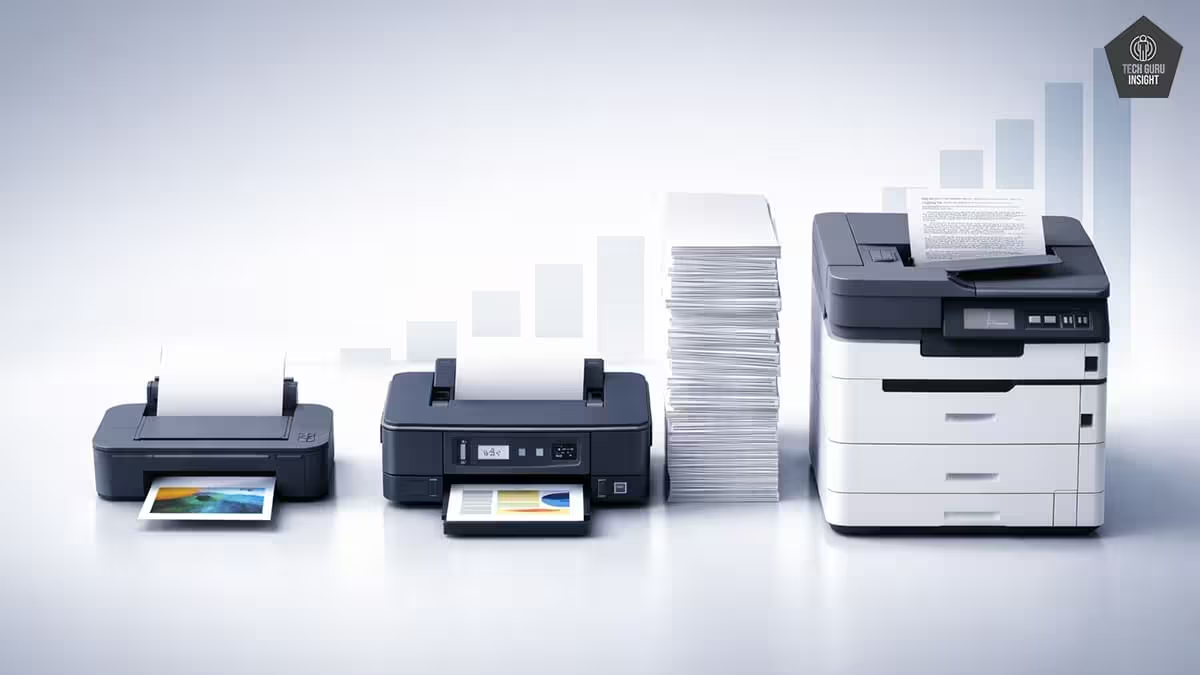
Understanding how different printer technologies behave financially can guide you toward the right choice.
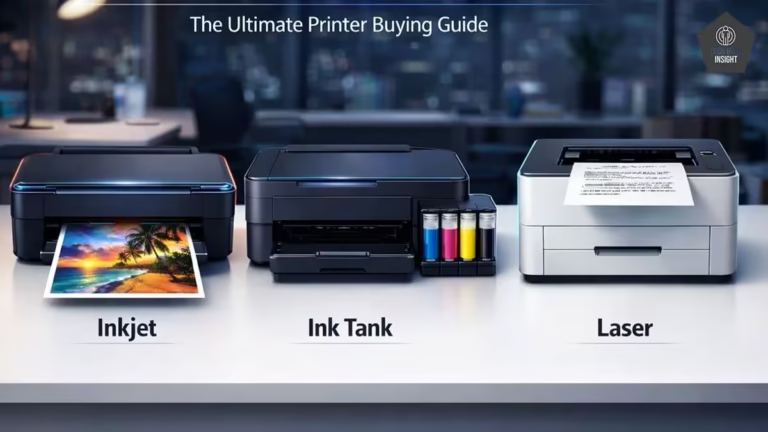
Inkjet Printers
- Low upfront cost
- High cartridge expense
- Higher cost per page
Best for: very occasional printing.
If you print rarely, the higher per-page cost may not matter much.
Ink Tank Printers
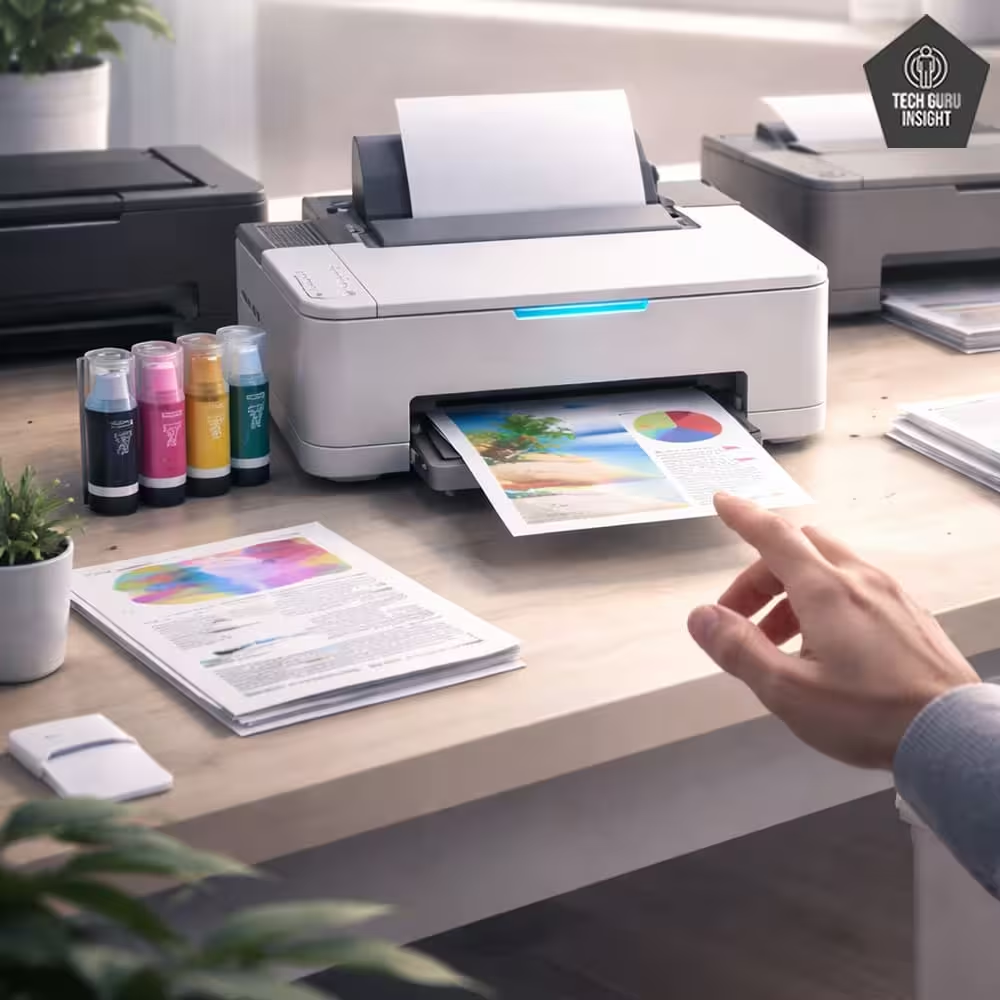
- Moderate purchase price
- Extremely low printing cost
- Designed for high volume
Best for: families, students, and home offices.
These printers are engineered for economical long-term usage.
Laser Printers
- Higher upfront cost
- Efficient for text printing
- Moderate cost per page
Best for: frequent document printing and office environments.
Laser printers shine when speed and consistency matter.
Quick Tip
“If you print more than 80–100 pages monthly, ink tanks usually become cheaper than inkjets.”
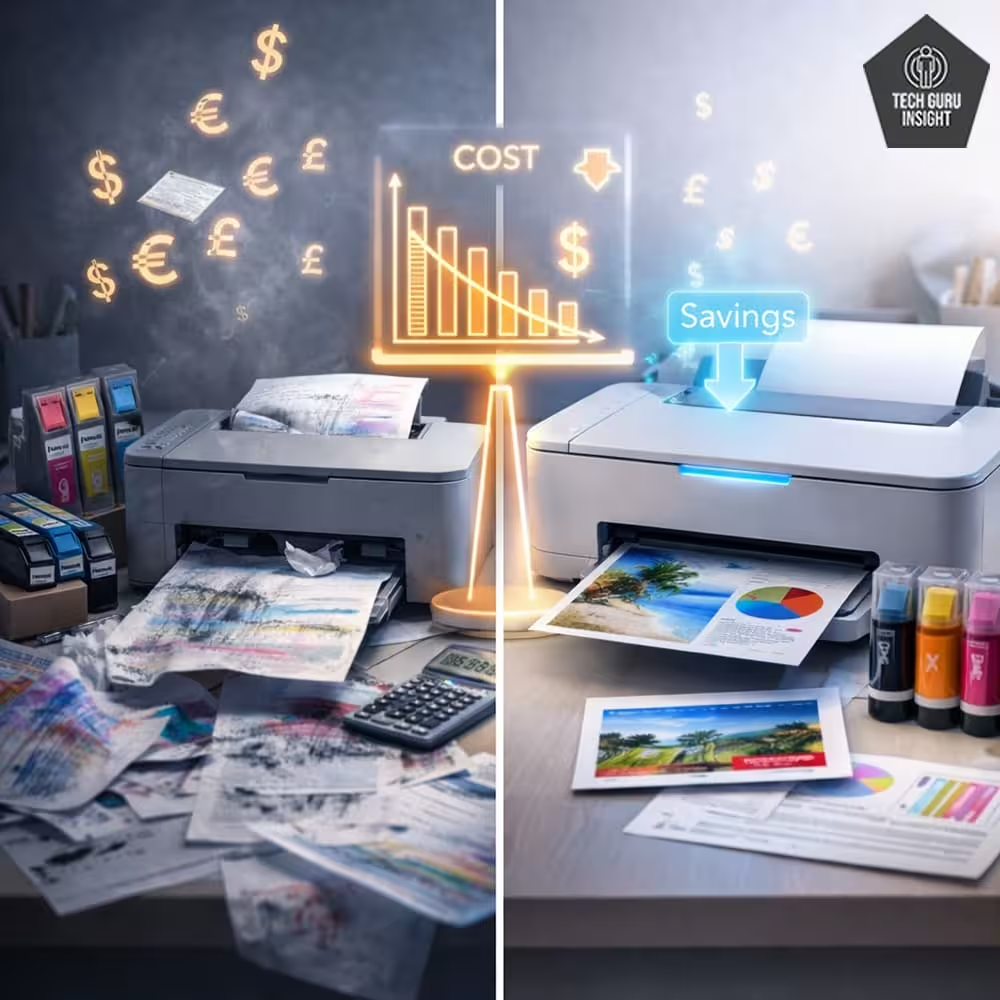
When Does an Expensive Printer Become Cheaper?
This is where smart buyers gain an advantage.
Low Printing Volume: (Up to ~50 pages/month)
A basic printer may be sufficient.
Medium Printing Volume: (80–200 pages/month)
Lower running costs begin to outweigh upfront savings.
High Printing Volume: (200+ pages/month)
Efficiency becomes critical — and long-term savings grow dramatically.
Decision Framework
The more you print, the more the cost per page matters.
Biggest Buyer Mistakes to Avoid
Many printer regrets stem from predictable errors.
❌ Looking Only at Printer Price: A low price can hide high operating costs.
❌ Ignoring Cartridge Yield: Two cartridges priced similarly may produce vastly different page counts.
❌ Buying for Today Instead of Tomorrow: Your printing needs often grow — especially for students or small businesses.
❌ Choosing Convenience Over Economics: Replacing expensive cartridges repeatedly is neither convenient nor economical.
Avoiding these mistakes puts you ahead of most buyers.
Who Should Prioritize Cost Per Page the Most?
While everyone benefits from lower printing costs, some users should treat this as a top priority.
- Students printing assignments regularly
- Families with school-going children
- Remote workers
- Small offices
- Coaching centers
- Home-based businesses
If printing is part of your routine, the cost per page directly affects your yearly expenses.
Expert Tip: Think Like an Investor
Before purchasing a printer, pause and ask:
“Will this device save me money — or quietly drain it?”
Smart buyers evaluate printers the same way investors evaluate assets:
👉 Consider long-term returns
👉 Minimize recurring expenses
👉 Avoid emotionally driven purchases
This mindset alone can save thousands.
Is Cost Per Page More Important Than Printer Price?
In most cases — yes.
The purchase price is a one-time expense.
Printing costs are recurring.
Over several years, recurring expenses almost always exceed the initial investment.
A slightly expensive printer with low running costs is often the financially wiser choice.
How to Instantly Estimate Your Printing Expenses
Use this quick mental calculator:
Monthly Pages × Cost Per Page = Monthly Expense
Then multiply by 12 for the yearly cost.
For example:
150 pages × ₹3 = ₹450/month
₹450 × 12 = ₹5,400/year
Now imagine that across five years.
Small numbers compound quickly.
How to Choose a Printer Without Regret
Follow this simple checklist before buying:
✅ Estimate your monthly print volume
✅ Check cartridge or toner yield
✅ Calculate cost per page
✅ Project at least three years ahead
✅ Compare lifetime cost — not just purchase price
When you approach printer buying analytically, poor choices become far less likely.
Final Thoughts: The Smart Buyer’s Advantage
The biggest printer mistake isn’t buying an expensive model…
It’s buying a cheap one with a high cost per page.
When you understand this single metric, you stop shopping based on price tags and start choosing based on long-term value.
A few minutes of calculation today can prevent years of unnecessary spending.
So before you make your next printer purchase, remember:
👉 Don’t ask, “How much does this printer cost?”
👉 Ask, “How much will it cost me to print?”
That small shift in thinking is what separates informed buyers from frustrated ones.
FAQ
Q1: What is considered a good cost per page?
Generally, lower is better. For regular printing, a very low per-page cost significantly reduces long-term expenses.
Q2: Are printers with higher upfront prices worth it?
Often, yes — especially if they offer substantially lower running costs.
Q3: Do printing habits affect the real cost per page?
Yes. Heavy graphics, photos, and high coverage can increase actual costs beyond estimates.
Q4: Should occasional users worry about cost per page?
It matters less for very light printing, but understanding it still prevents overpaying.
Q5: Is calculating printing cost complicated?
Not at all. Once you know the formula, it takes less than a minute.